Rancheros from Michoacan.
Migrant women in Jaripo, Michoacan marching during that village's annual fiesta.    (Antonio's Gun and Delfino's Dream)
A statue of Juan Soldado, unofficial patron saint of illegal immigrants at the shrine over his grave in Municipal Cemetery #2 in Tijuana
"The most original writer on Mexico and the border out there."   San Francisco Chronicle
SamQuinones
.journalist, author

"A great storyteller..."     Amazon.com reader
WHAT'S NEW   ...     This site, for one, recently redesigned. Also ...

The Heroin Road: A three-day LA Times series about the small Mexican town of Xalisco, where men emigrate to sell heroin and have pushed the drug across the US.
Day 1 -- Day 2 -- Day 3

All Things Considered ran this interview about The Heroin Road. Listen.  NPR's On Point did an hour on the series. Listen.

LA Times story about the divided life of a street-gang shotcaller testifying against his gang. Read.

Tell Your True Tale is an experiment in storytelling. Everyone has a story to tell. Write yours. Send it in.

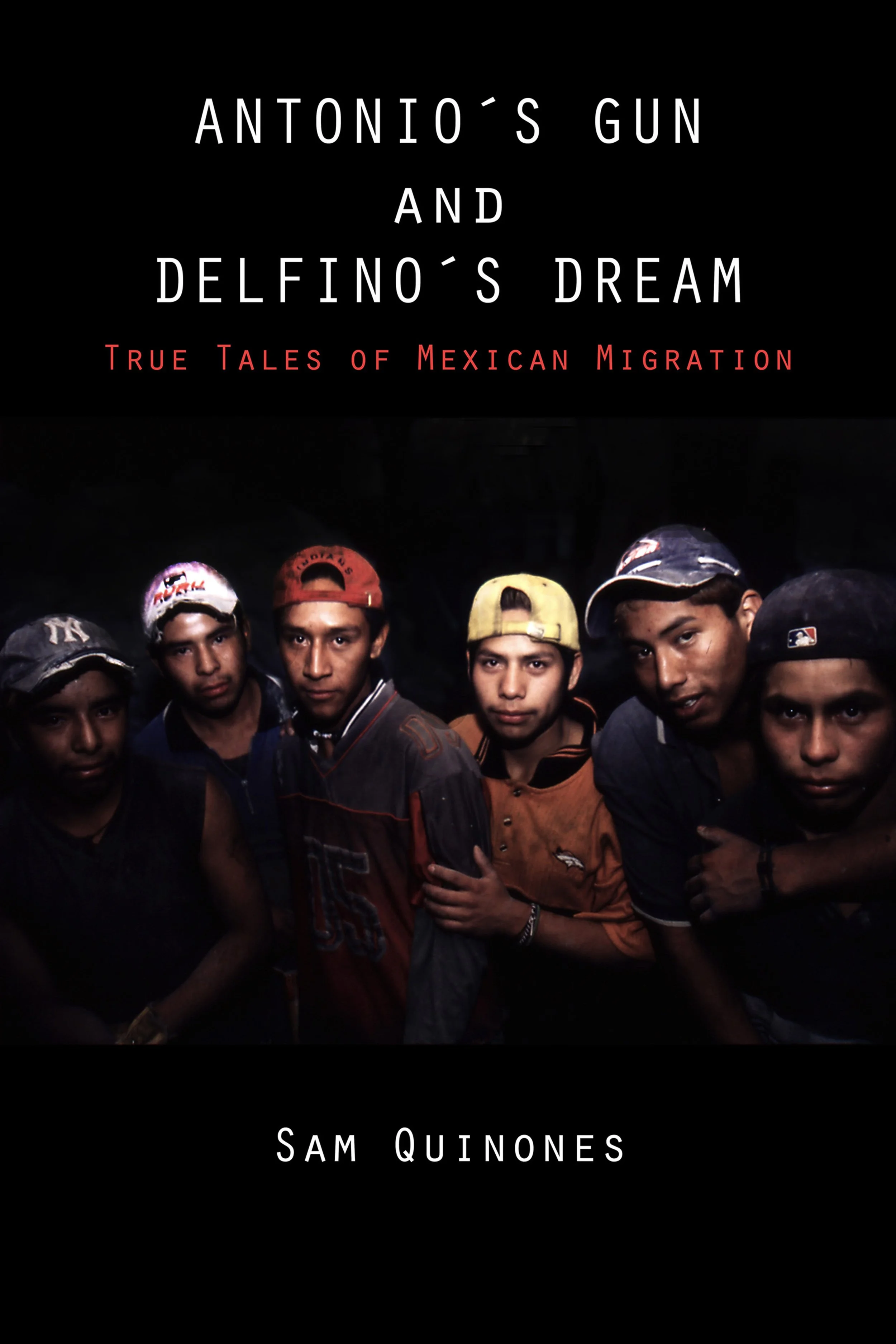
Teachers: Read how a Univ. of Iowa history prof shaped a class around Antonio's Gun and Delfino's Dream.  (journal of american ethnic history)

The Photos page now has photo essays. Up now: the Alameda park break-dance scene in Mexico City, and velvet painters from Juarez and Tijuana. Also new photos of Antonio Carrillo, from Antonio's Gun and Delfino's Dream.

PBS' Maria Hinojosa's One on One interview. Watch.

Foreign Policy magazine story on Mexico's drug war. Read.
"...a tireless reporter, fascinated by the stories that lie behind an ephemeral headline."
The Economist
A Beth Penny photo
Rodolfo Duran is one of the pioneer yeseros, the plaster workers who supply border vendors with statues of Mickey Mouse, bulls, Spiderman and the Virgin of Guadalupe, in Tjuana's Colonia Libertad near the border crossing.